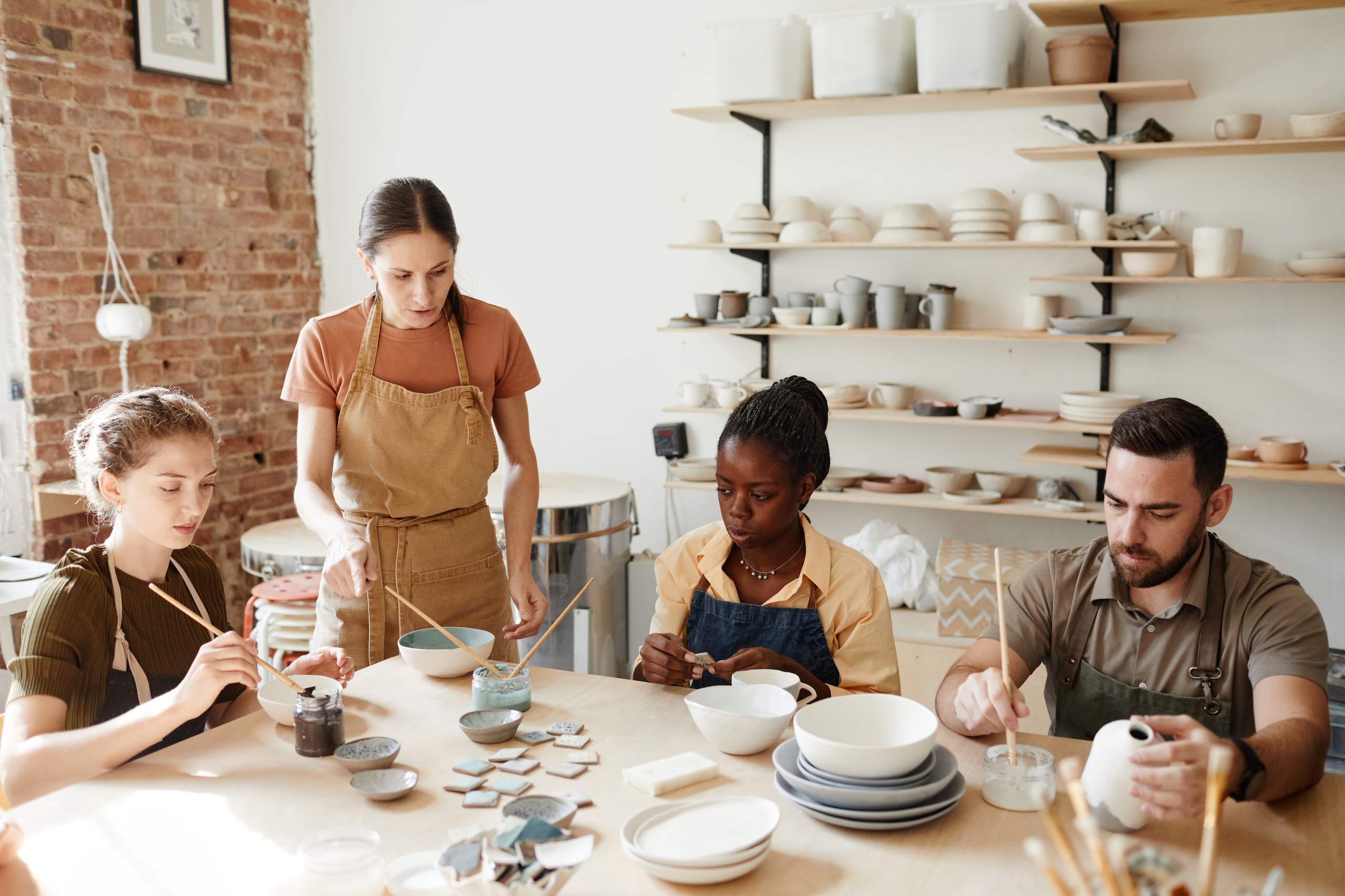
The moment you open the kiln to discover how your work has fired is often when a student is first introduced to the magic of glazes.
What is a glaze?
A glaze is a glass coating made from natural minerals that is applied to pottery before firing. This glassy coating is then fired onto the clay body to permanently bond with it. It creates the colors, patterns, and textures we see on pottery. Glazes also make pottery waterproof, so you can use pottery mugs to drink coffee.
What are the different kinds of glazes?
There are many different glazes out there. Different kinds of glazes create different types of surface effects on your pots. Here are just a few of the different types:
Glossy Glazes: These glazes are smooth to the touch and have shiny surfaces. The reflective surface can also intensify colors.
Matte Glazes: Matte finishes look softer and more natural than glossy glazes. Matte finishes have less reflection but can be just as beautiful. Many of the glazes we use here are matte. These finishes have become very popular recently because of their modern look and feel.
Transparent Glazes: These glazes let the color and texture of the underlying clay and slips show through the glaze itself.
Reactive Glazes: These glazes are unpredictable. Different colors and textures react and interact during the firing process in unique ways, so that every piece has a one-of-a-kind look.
Why did my piece look different in the kiln?
One reason you should expect your pieces to look a little different than they did when you originally painted them, is that glazes fire completely differently. They can become darker, lighter, change texture, or react in entirely different ways than they did before.
There are many reasons for the results in the kiln to be different. The temperature of the kiln can have a lot to do with how glazes look on a piece. You will also see how the type of clay, thickness of the glaze, and the placement of pieces in the kiln all have their effects on the look of a final glaze.
A few tips for those getting started with glaze
Many new students find these tips very helpful when first exploring the world of glazes.
- Even application of glaze is key for more predictable results.
- It is very important to keep records of your colors and firing temperatures.
- Make test tiles to experiment with your glazes before applying them to your finished pieces.
- Explore layering glazes and using different glazes together for unique effects and textures.
This will create a record of which glazes worked for you and what your preferred firing temperatures are for each. This will be invaluable as you gain experience and start developing your own style.
The thrill of opening the kiln
The reveal after firing, when you open up the kiln to see what your piece looks like after a complete firing is complete, is one of the most exhilarating moments in the creative process for many ceramic artists. The piece can have deepened colors, textures that are now visible that weren’t before, and a thousand and one other ways in which it has transformed.
One reason why so many artists are inspired and continue to be captivated by pottery, is because it’s just that element of surprise is impossible to know beforehand, and is the joy of the experience.
The importance of developing one’s own style
As you continue to experiment with your work, the choice of glaze you use will become a critical part of developing your own ceramic style. Whether you gravitate toward the muted tones, the matte texture, the bold colors, and dramatic textures of your work is really a choice you make.
You are only able to achieve such things through learning how your glazes react during firing, and this comes from firing many, many pieces. It comes with time and dedication. But if you approach your work with patience and curiosity, you can learn how to create pottery that represents your vision.